
Pakistani rice for wholesale & export
Nankana Rice is a Pakistan-based IRRI 9 rice supplier serving wholesalers, importers, retailers, foodservice businesses and commercial buyers. IRRI-9 suits markets seeking a well-presented non-Basmati grain for everyday consumption, bulk cooking and branded retail supply.
Pakistan
IRRI-9
Coarse non-Basmati rice
White, Steam and Sella
No minimum quantity
Bulk, retail and private label
Grades: Defined by the order specification
IRRI-9 belongs to Pakistan’s non-Basmati rice range. It is commonly evaluated by buyers who want an economical commercial rice with a stronger grain presentation than standard bulk grades.
The variety can fit between volume-led IRRI-6 supply and higher-priced aromatic rice. It does not carry the traditional fragrance or market identity of Basmati, but its grain appearance and cooking utility can support a broader retail and foodservice position.
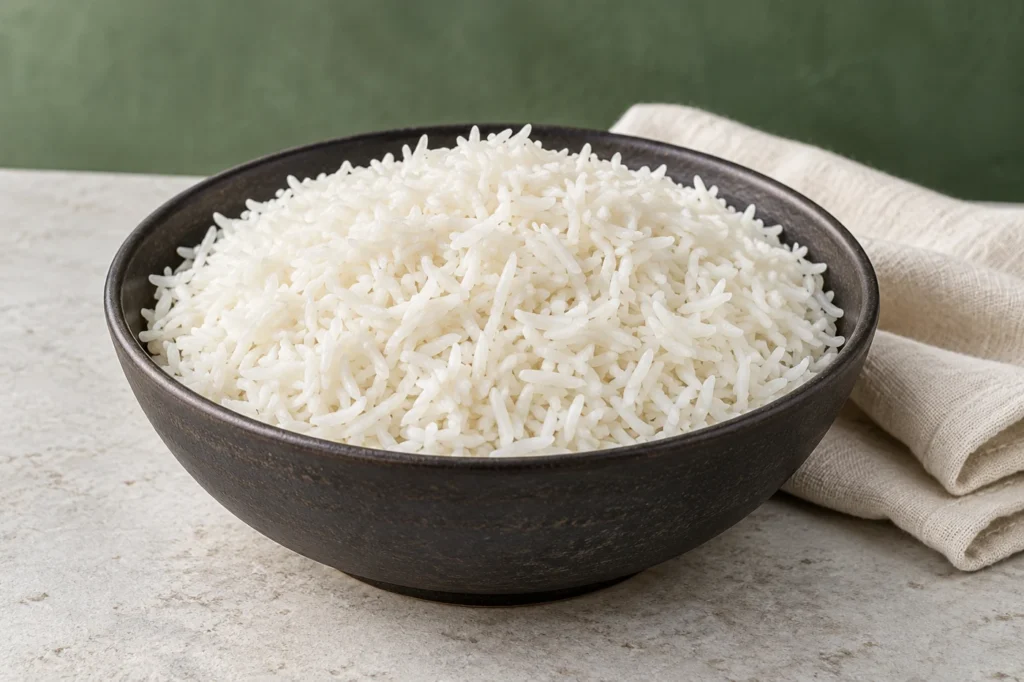
IRRI-9 and IRRI-6 are both Pakistani non-Basmati commercial varieties, but they should not be treated as identical.
IRRI-9 is generally considered when a longer and more refined grain presentation matters. This can make it relevant to retail packs, restaurants and distributors seeking a higher visual position within the non-Basmati category.
IRRI-6 remains strongly suited to price-sensitive volume buying, institutional catering and staple-rice programmes. The better option depends on the buyer’s required appearance, cooking result and budget.
| Buying Priority | Rice to Consider |
|---|---|
| Stronger non-Basmati grain presentation | IRRI-9 |
| Economical high-volume supply | IRRI-6 |
| Aroma and premium market identity | Basmati |
| Fragrant fine rice position | PK 386 |
Processing affects the colour, firmness and cooked texture of IRRI-9. Buyers should choose the form according to the intended meal, customer and sales channel.
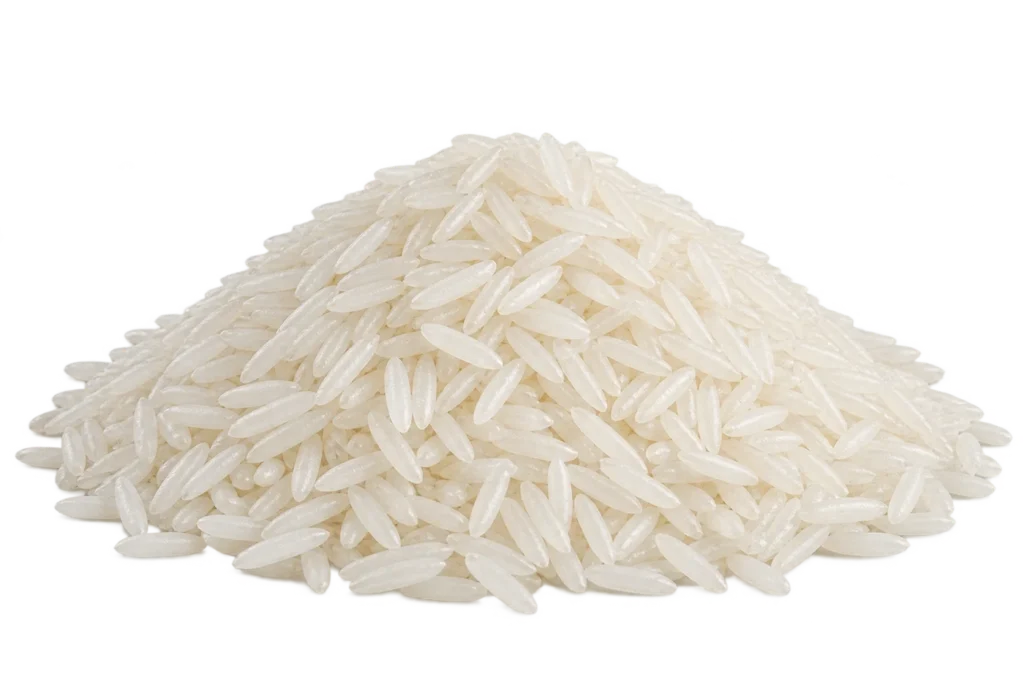
White IRRI-9 has a clean, polished appearance and a mild flavour profile. It can suit retail packing, restaurants, household consumption and general wholesale distribution.
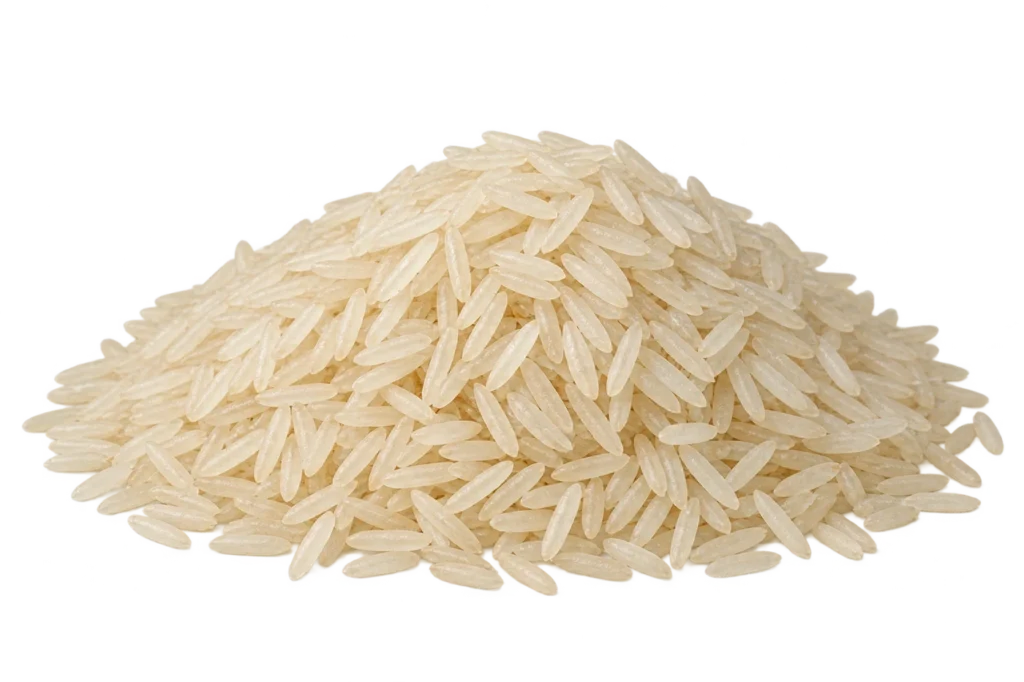
Steam processing strengthens the grain and supports separation during cooking. This form can be considered for catering and commercial kitchens preparing rice in larger batches.
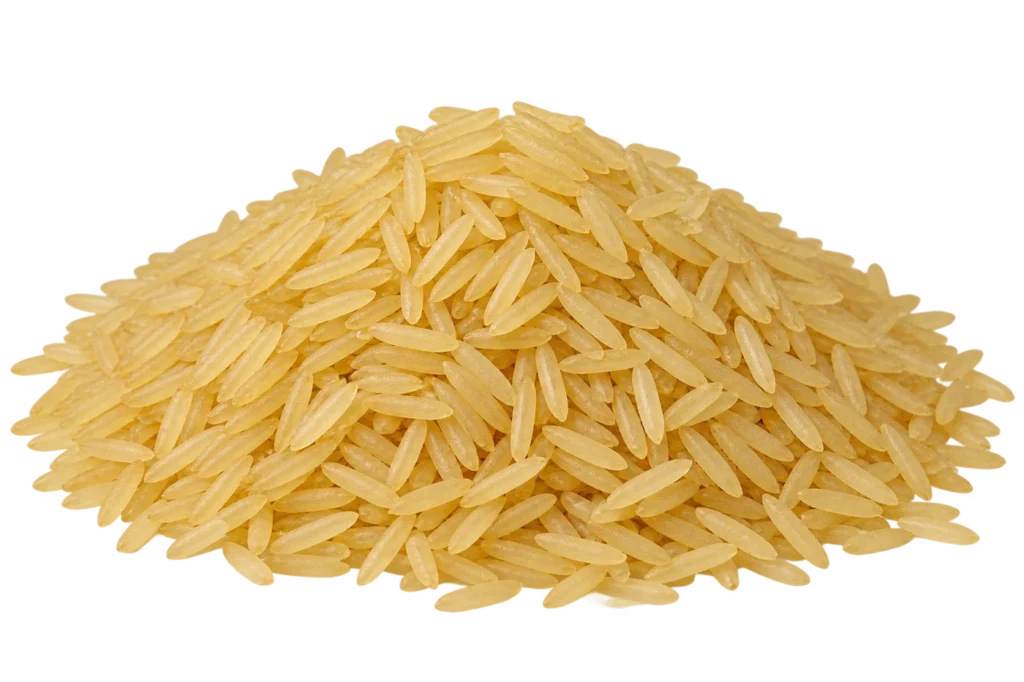
Sella processing parboils the grain before milling. The finished rice has a firmer character and can retain its shape during bulk preparation and holding.
| Processing | Main Character | Common Application |
|---|---|---|
| White | Clean, polished presentation | Retail and everyday meals |
| Steam | Stronger grain structure | Restaurants and catering |
| Sella | Firm parboiled grain | Foodservice and bulk cooking |
Some commercial rice catalogues place IRRI-9 and C9 together under the term “IRRI-9/C9.” Buyers should not rely on naming alone when comparing products.
Clear specifications prevent a familiar trade name from replacing the details that determine product suitability.
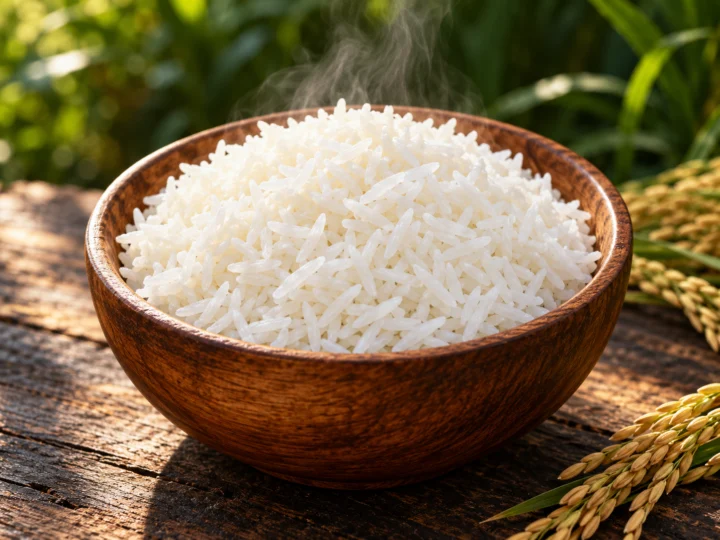
IRRI-9 can be prepared in different commercial grades. The broken-rice percentage is especially important because it affects pack appearance, intended use and price.
A lower-broken grade may suit consumer packs, hospitality or buyers placing greater emphasis on whole-grain presentation. Other grades can serve wholesale and large-scale food requirements where purchasing economics carry more weight.
Additional buying criteria may include polishing, damaged grains, chalky kernels, foreign matter and contrasting varieties. These points should be agreed before order confirmation.
Nankana Rice can review a buyer’s existing specification or build the discussion around the intended application and market position.
| Specification | Available Information |
|---|---|
| Product | IRRI-9 Rice |
| Country of Origin | Pakistan |
| Category | Coarse non-Basmati rice |
| Grain Profile | Long-grain commercial rice |
| Processing | White, Steam and Sella |
| Grade | Broken percentage agreed with buyer |
| Quality Criteria | Moisture, purity, admixture and grain condition agreed with the order |
| Quantity | No minimum order |
| Packaging | Bulk bags, retail packs and private label |
Its grain presentation can suit consumer-facing packs where buyers want a non-Basmati product positioned above basic commodity rice.
White, Steam and Sella forms allow commercial kitchens to select rice according to texture, batch size and holding requirements.
Importers and regional distributors can choose a grade based on local demand, pricing and pack format.
IRRI-9 can be considered for schools, workplaces, accommodation facilities and other operations serving rice in volume.
Manufacturers can assess the variety for prepared meals and other rice-based products according to their processing needs.
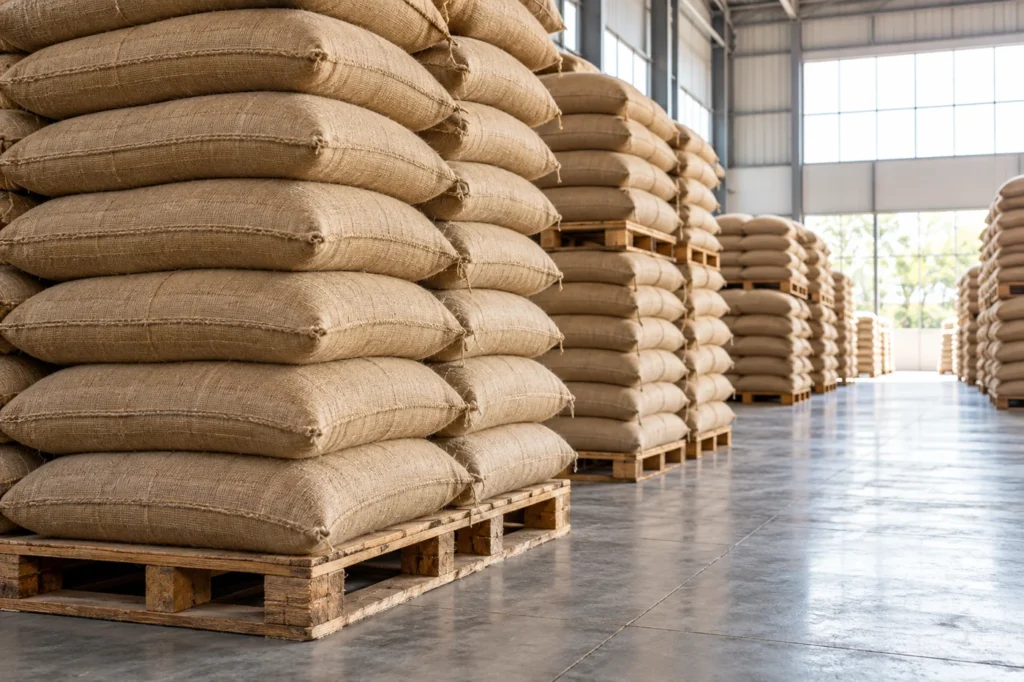
Wholesale requirements should be discussed around the complete order rather than total volume alone. Processing method, grade, broken percentage, packaging and destination all influence the suitable product.
Nankana Rice accepts IRRI-9 enquiries from:
Nankana Rice does not set a fixed minimum order quantity for IRRI-9. Buyers can discuss smaller requirements as well as larger wholesale and export orders.
Quantity may affect the pack format, transportation method and unit price. These factors are assessed using the actual order information.

Packaging should reflect what happens after the rice reaches the buyer. Wholesale and foodservice businesses may need larger bags, while retailers and brands require packs prepared for consumer sale.
Private-label buyers can share their artwork, pack information and market labelling requirements during the enquiry.
Nankana Rice works with overseas buyers sourcing Pakistani IRRI-9 for distribution, retail, foodservice and institutional supply.
A detailed enquiry creates a stronger basis for selecting the product and preparing commercial terms.
State IRRI-9 clearly and identify any trade naming used in the target market.
Choose White, Steam or Sella based on the expected cooking result.
Provide the broken percentage, moisture, purity and other required criteria.
Explain if the rice is required in bulk, retail or private-label packs.
Share the order volume and delivery location before requesting pricing.

No. IRRI-9 is a non-Basmati coarse rice variety. It is purchased for commercial utility and grain presentation rather than traditional Basmati aroma.
IRRI-9 is generally considered for a longer and more refined non-Basmati grain presentation. IRRI-6 is often selected for economical, high-volume staple-rice requirements.
The names are sometimes combined in commercial catalogues, but buyers should confirm the exact variety and specification rather than assume every IRRI-9/C9 offer is identical.
Nankana Rice supplies White, Steam and Sella IRRI-9. Each form has a different appearance, firmness and cooking character.
No. Nankana Rice has no fixed minimum order. Pricing, packaging and transport depend on the quantity and destination.
Yes. Private-label packaging can be discussed according to the required pack size, material, artwork and label information.
Buyers can compare IRRI-9 with IRRI-6 for more volume-led purchasing, PK 386 for a fragrant fine-rice position or Basmati varieties for an aromatic premium category.
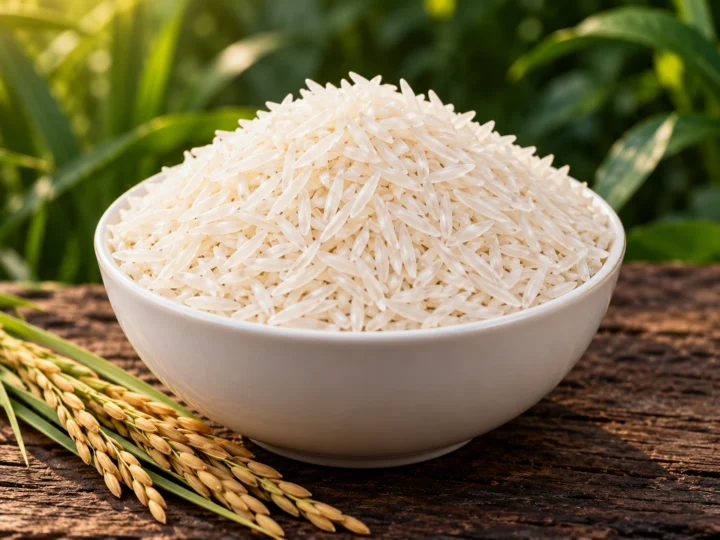
Extra-long grains with impressive elongation & elegant plate presentation.
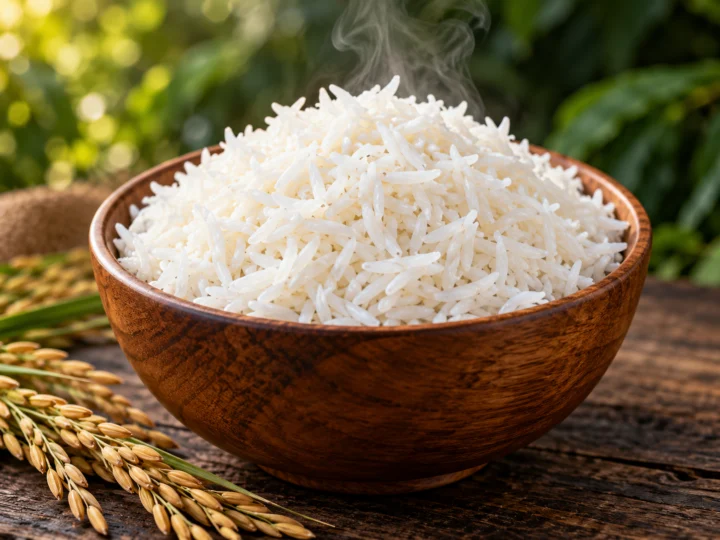
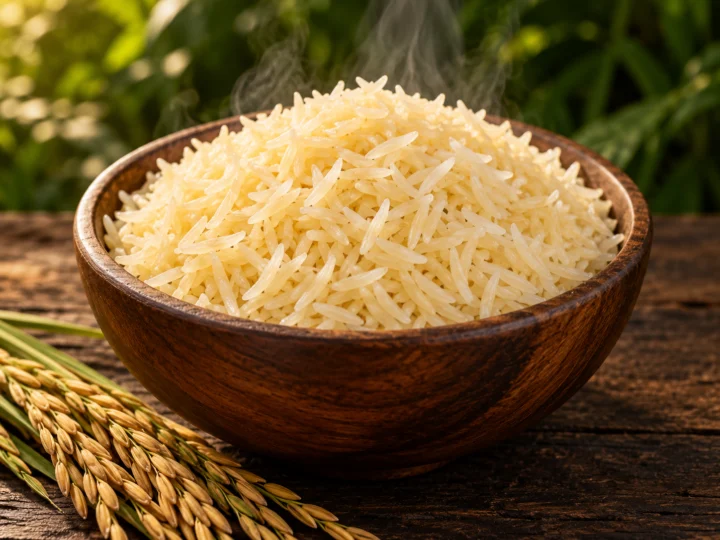
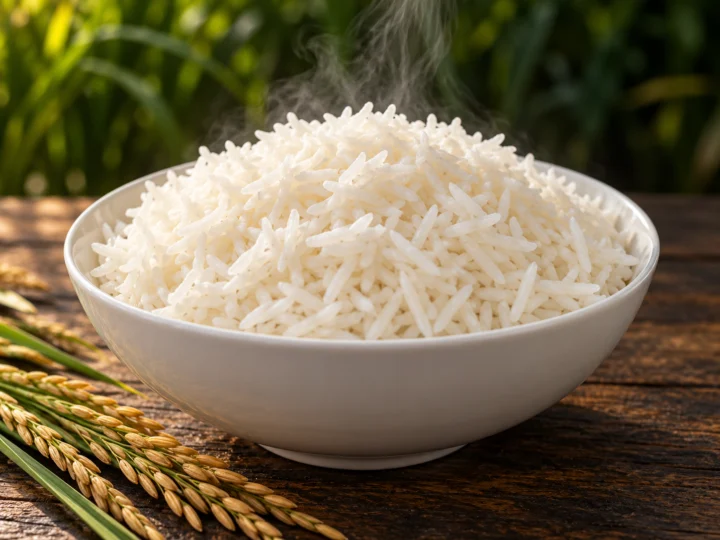
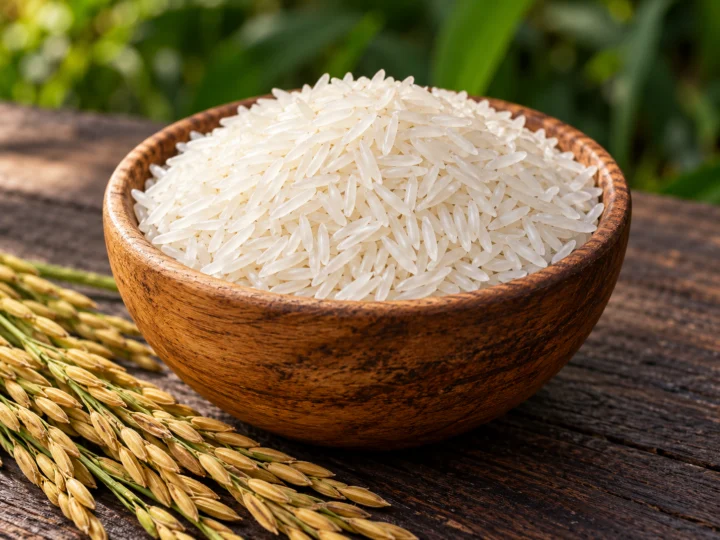
IRRI-9 is purchased for commercial utility, long-grain presentation, and a market position distinct from both Basmati and more volume-led rice. Choosing the variety is only the first step. Processing, broken percentage, grain profile, moisture, purity, polishing, packaging, and destination requirements shape the final product.
An IRRI 9 rice supplier needs more than a request for “good quality IRRI-9.” The buyer should explain which customers will purchase the rice, how it will be cooked, and which characteristics matter most in the intended market.
This turns a broad variety request into a product that can be selected, priced, and compared properly.
IRRI-9 belongs to Pakistan’s non-Basmati rice range. It should not be presented as Basmati or sold through claims associated with traditional Basmati aroma.
The correct category supports clearer decisions around:
Describing IRRI-9 as long-grain non-Basmati rice gives buyers a more accurate commercial starting point than calling it premium Basmati or reducing it to basic bulk rice.
Its value lies in its own category. Buyers may select it where grain presentation matters but traditional Basmati identity is not required.
IRRI-9 may also appear as NIAB-IRRI-9, IRRI-9/C9, C-9, or another market reference. Pakistani trade catalogues sometimes place C9 and IRRI-9 together, but buyers should not assume that every product using these names carries an identical specification.
The enquiry should confirm:
A supplier should not replace a requested variety with another trade reference without explaining the difference.
If the destination market commonly uses “IRRI-9/C9,” the quotation can record that terminology while still defining the actual rice and grade being supplied.
IRRI-9 may be offered under different broken-rice percentages and commercial grades. The variety name alone does not establish the proportion of whole and broken grains in the order.
Broken percentage can influence:
Uncooked pack appearance and cooked presentation.
Customer acceptance and suitability for different uses.
Retail positioning and commercial price.
Production use and whole-grain requirements.
A retail buyer may require a stronger whole-grain presentation. An institutional buyer may accept a different grade where volume and purchasing economics matter more. A food manufacturer may have its own grain-form requirement based on the finished product.
The buyer should state the maximum acceptable broken percentage rather than asking generally for “whole rice” or “low broken rice.”
The suitable grade should reflect the application. A tighter limit has little commercial value if the final customer does not require it.
IRRI-9 is commonly traded as long-grain rice, but the expected measurement and uniformity should be recorded if grain presentation affects the buying decision.
Important points may include:
A general statement such as “long grain” may be understood differently across suppliers. Buyers comparing several offers should request the same measurement basis from each source.
The grain-length requirement should also remain proportionate to the variety. IRRI-9 should not be assessed through specifications created for 1121 or another extra-long Basmati rice.
White, Steam, and Sella IRRI-9 occupy different commercial positions. Buyers should select the processing form according to the cooking method and customer expectation.
White IRRI-9 may suit consumer retail, restaurant service, household use, wholesale distribution, and prepared-food applications.
The buyer should confirm the required milling, polish, colour, broken percentage, and grain condition. Retail products may need greater visual uniformity than rice purchased for commercial cooking.
Steam IRRI-9 may be considered where grain strength and separation are important during preparation.
Restaurants, caterers, and institutional kitchens should explain the batch size, cooking method, serving style, and holding period. These conditions can influence whether the proposed rice suits the operation.
Sella IRRI-9 may serve markets that prefer parboiled non-Basmati rice with a firmer cooked character.
The intended colour should be clarified. Words such as creamy, golden, or light may not have a universal commercial meaning. An agreed reference or clear description provides a stronger basis for selection.
The final grade should address more than processing and broken percentage.
State whether the buyer requires a particular crop year or is open to available stock. Crop information can be relevant to purchasing policy, storage planning, and product comparison.
Do not use crop year as a substitute for the complete grade.
The moisture limit can affect storage, handling, transport, and acceptance. Include the required maximum where the buyer already works with an established standard.
Purity should be stated through an agreed percentage or testing basis. The word “pure” does not explain the amount of grain outside the required variety.
Admixture may include grains or material outside the agreed profile. The acceptable limit should be recorded clearly.
The order may set limits for foreign matter, paddy grains, damaged grains, discoloured grains, under-milled kernels, or other conditions important to the buyer.
Chalky grains may affect uncooked appearance and customer perception. Retail buyers may give this parameter greater importance than some foodservice or production buyers.
The required polish and colour should match the market position. If the rice will be visible through the pack, these details may strongly influence retail acceptance.
A specification does not need every possible parameter. It should include the points that materially affect the intended use and purchasing decision.
Different sales channels evaluate IRRI-9 through different priorities.
Retail buyers may focus on whole-grain appearance, polish, colour, pack presentation, price position, and clear cooking instructions.
IRRI-9 should have a defined role beside IRRI-6, PK-386, and Basmati products. Customers need a clear reason to understand where it sits within the range.
Foodservice buyers may give greater weight to texture, separation, cooked appearance, batch performance, and holding.
The rice should be tested using preparation conditions close to the actual kitchen rather than selected through the uncooked grain alone.
Schools, workplaces, accommodation facilities, hospitals, and other institutional operations may require rice for repeated large-batch preparation.
The grade should reflect purchasing economics, practical cooking, storage, handling, and meal requirements. A specification created for premium retail may add cost without improving the institutional result.
Wholesalers may serve several buyer groups. The selected grade should reflect where most of the demand is expected to come from.
A wholesaler supplying consumer stores may need a different IRRI-9 grade from one serving restaurants or institutional kitchens.
Manufacturers should define how the rice will function within the final product. Whole-grain presentation may be critical for some prepared meals, while another production process may accept a different grain form.
Processing compatibility and production requirements should guide the grade.
The appearance of uncooked IRRI-9 provides useful information, but commercial suitability becomes clearer after preparation.
A cooking assessment may consider:
Testing conditions should remain consistent. Washing, soaking, water ratio, cooking time, batch size, equipment, and resting period can all influence the result.
Where a representative sample is available, buyers should prepare it under conditions close to actual use. A small household test may not reflect the demands of catering or institutional cooking.
The result should be evaluated against the intended application, not against Basmati characteristics that IRRI-9 is not expected to provide.
IRRI-9 may serve buyers who want a more refined non-Basmati presentation than a basic volume-led grade. That position should be supported by the actual product rather than promotional wording.
A stronger position may depend on:
A whole-grain proportion that supports the intended presentation.
Consistent grain appearance and profile.
A milling and polish level appropriate for the market.
Clear limits for material outside the agreed profile.
Product appearance aligned with customer expectations.
Clear product naming and suitable retail presentation.
The phrase “premium non-Basmati” should not replace these details. If the buyer wants a higher visual position, the commercial grade must explain how that position will be achieved.
The product should still remain distinct from aromatic Basmati. Its value comes from presenting IRRI-9 accurately and competitively within its own category.
IRRI-9 and IRRI-6 may serve overlapping commercial markets, but they should not be quoted as identical products.
IRRI-6 is widely used for economical, high-volume rice requirements. IRRI-9 may be considered where buyers want a different long-grain profile or a stronger visual position within non-Basmati rice.
Before choosing between them, compare:
A higher price is justified only when the differences matter to the customer or operation.
Two IRRI-9 prices may cover different grades.
Place these details side by side:
A quotation for printed retail packs cannot be compared directly with one based on standard bulk bags. Different broken-rice limits may also create a meaningful price difference.
Confirm that the offers describe comparable products before selecting the lowest number.
A private-label pack should use accurate category language.
The product may be described as Pakistani IRRI-9 long-grain non-Basmati rice, followed by the agreed processing form and any supported grade information.
Packaging claims should match the order specification. Avoid unsupported statements about Basmati identity, aroma, grain length, purity, or cooking performance.
Private-label buyers should also confirm:
The rice and the packaging should communicate the same product.
A focused enquiry should include:
Share your required grade, processing form, broken percentage, quantity, packaging, and destination. Nankana Rice can help you discuss IRRI-9 specifications for wholesale, retail, foodservice, and manufacturing requirements.
Request a QuoteShare the processing form, broken percentage, quantity, packaging and destination. Nankana Rice will review the requirement and prepare the next commercial step.