
Pakistani rice for wholesale & export
Choose a recognised non Basmati rice variety with a long grain profile for wholesale, retail, food service, and export requirements.
Pakistan
KSK 434
Long grain
Non Basmati
White, Steam or Sella
Bulk, retail and private label
A variety code alone does not tell buyers everything about the finished rice. Processing, broken percentage, moisture, polish, crop condition, and storage can all influence commercial suitability.
KSK 434 is officially classified as coarse rice rather than Basmati. It should be considered when buyers need a defined Pakistani non Basmati variety with a long grain profile and flexible processing choices.
The recorded grain length describes the variety. Shipment specifications should be confirmed separately for each order.
KSK 434 was released for cultivation in Pakistan in 2013.
Punjab Agriculture records an average varietal grain length of 7.06 mm.
It belongs to Pakistan’s coarse or medium rice group.
Processing and packaging can be selected around market requirements.
KSK 434 is not a Basmati variety. Buyers should not expect the same aromatic profile, geographical positioning, or premium identity associated with recognised Basmati rice.
Its role is more practical. It can support markets where buyers prioritise grain appearance, cooked texture, processing form, required grade, and purchasing value.
For an aromatic premium range, compare Basmati products. For non Basmati distribution or commercial meal preparation, KSK 434 may be a more relevant category to assess.
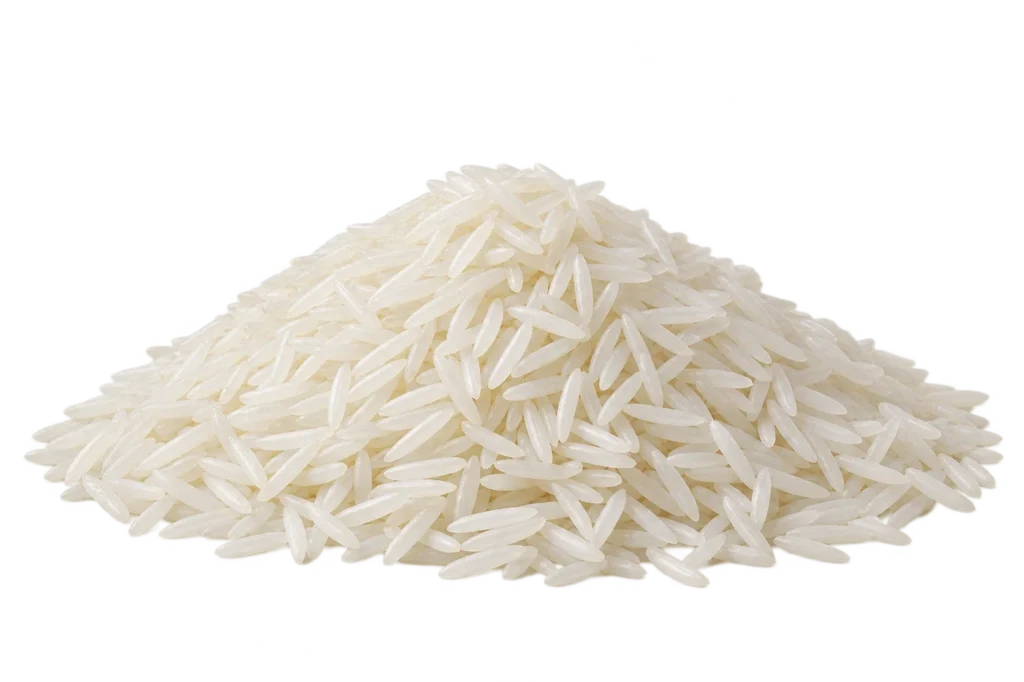
Milled rice with a familiar white appearance for retail and everyday food preparation.
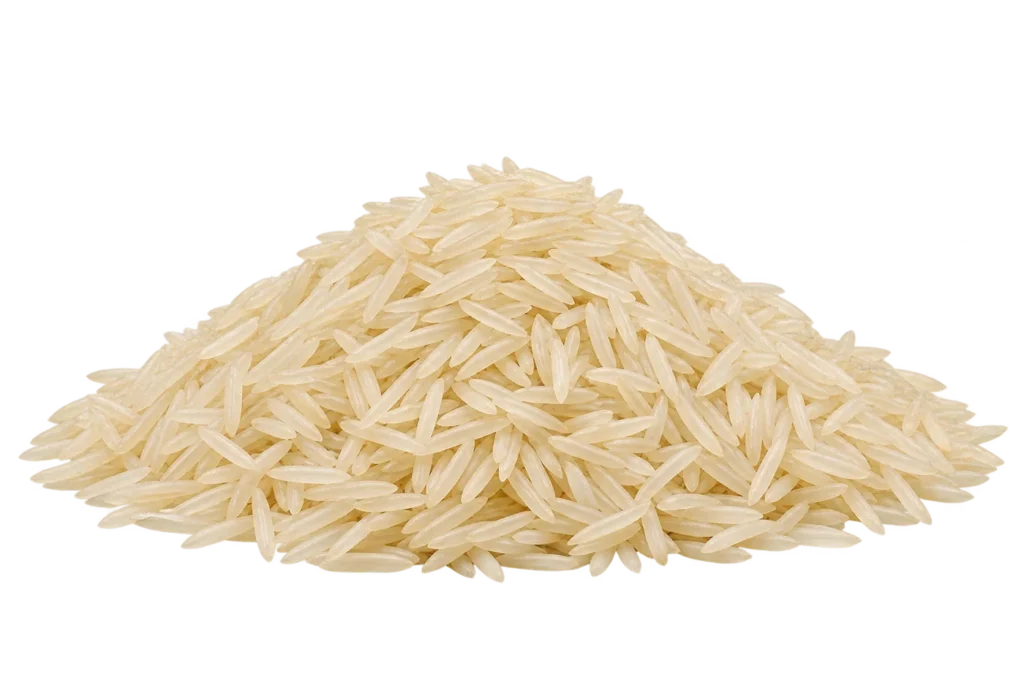
Steam processing can support stronger grains and a more defined cooked presentation.
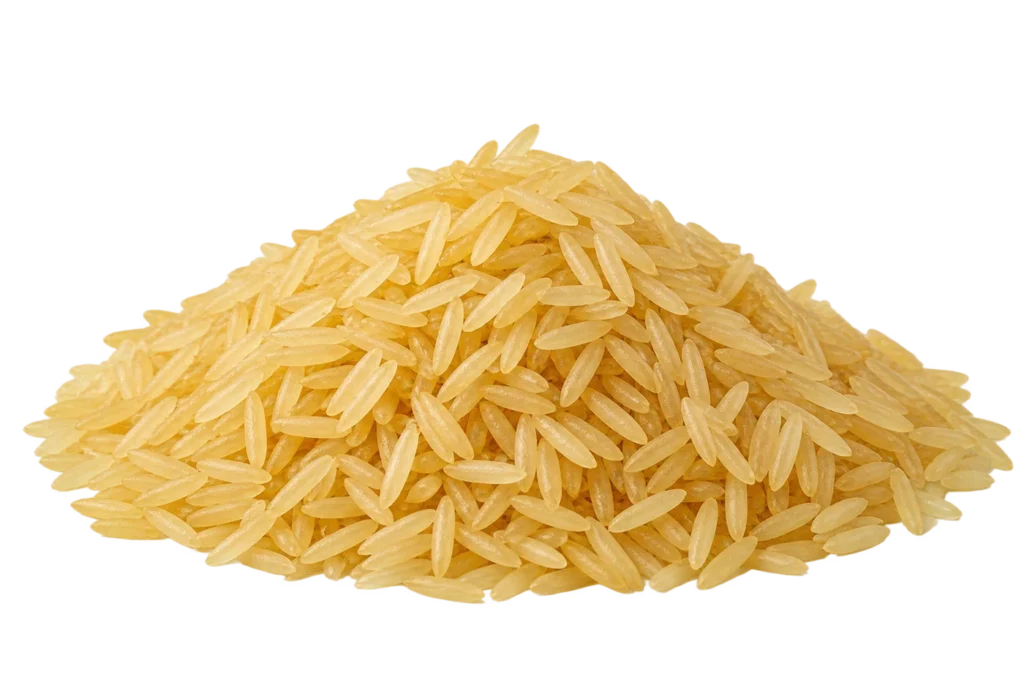
Parboiled processing is suited to markets that prefer firmer grains and greater resistance during commercial cooking.
The right option depends on the recipe, holding time, kitchen process, and customer preference.
Final supply should follow the specifications agreed during quotation.
| Product Detail | Available Requirement |
|---|---|
| Variety | KSK 434 |
| Classification | Coarse or medium, non Basmati |
| Country of Origin | Pakistan |
| Official Grain Reference | 7.06 mm average |
| Processing | White, Steam, or Sella |
| Broken Percentage | Agreed by order |
| Polish Requirement | Discussed during enquiry |
| Packaging | Bulk, retail, or private label |
| Minimum Order | No minimum order quantity |
The two varieties have similar official average grain length references, but they remain separate varieties.
Neither option should be selected from grain length alone. Current stock, processing, grade, cooking behaviour, and price should guide the final choice.
| Buying Point | KSK 434 | KSK 133 |
|---|---|---|
| Classification | Coarse rice | Coarse rice |
| Release Year | 2013 | 2006 |
| Official Grain Reference | 7.06 mm | 7.07 mm |
| Basmati Variety | No | No |
| Commercial Processing | Based on availability | Based on availability |
KSK 434 can be considered by:
A buyer supplying restaurants may prioritise cooked stability, while a retail brand may focus more heavily on grain appearance, pack presentation, and market price.
KSK 434 Rice prices can change according to:
A detailed requirement produces a more useful quotation than requesting a price based only on the variety name.

Nankana Rice supplies KSK 434 for wholesale distribution, commercial use, repacking, and retail requirements.
Buyers can discuss smaller requirements, recurring purchases, or bulk orders. No fixed minimum order quantity is applied.
For wholesalers, importers, commercial kitchens, and repacking businesses.
Shelf ready pack formats for stores and consumer distribution.
Custom branded packaging for businesses developing their own rice products.
Small orders accepted. Bulk orders welcome.
Nankana Rice supports businesses seeking a KSK 434 Rice Exporter in Pakistan for wholesale, retail, food service, and private label supply.
Provide the destination country, required grade, processing form, packaging, and quantity. Any destination-specific documentation can then be reviewed as part of the enquiry.

KSK 434 is a Pakistani coarse or medium rice variety released in 2013. It belongs to the non Basmati category.
Punjab Agriculture records an average varietal grain length of 7.06 mm. Shipment-level grain specifications should be confirmed before ordering.
No. KSK 434 is officially classified as coarse rice and should not be labelled as Basmati.
They are separate coarse rice varieties released in different years. Their official grain length references are similar, so buyers should compare availability, processing, grade, cooking result, and price.
White, Steam, and Sella processing can be discussed according to current availability.
Yes. Nankana Rice can discuss bulk bags, retail packs, and private label packaging.
No. Small requirements and bulk commercial orders are welcome.

Extra-long grains with impressive elongation & elegant plate presentation.



Traditional basmati aroma with dependable texture for everyday meals.


A rice variety can appear suitable on paper and still require practical evaluation before it becomes part of a restaurant menu, wholesale range, retail product, or recurring distribution programme.
KSK 434 should therefore be assessed against its intended commercial role. A food service buyer may care about cooked texture, batch performance, and holding quality. A retailer may place greater importance on raw grain appearance, pack presentation, customer expectations, and price position. Importers and distributors need a product that remains aligned with the grade and processing form approved for their market.
A structured approval process gives buyers a clearer basis for deciding whether KSK 434 fits that role.
Before requesting a sample, define what the rice needs to accomplish.
The same product may be evaluated differently when it is intended for:
A commercial kitchen may reject a rice that does not perform well in large batches, even if the uncooked grains look attractive. A retail business may reach a different conclusion because shelf appearance and customer price expectations carry greater weight.
Write down the intended application before comparing samples. This keeps the evaluation connected with the buying decision rather than turning it into a general tasting exercise.
A sample is useful only when it represents the product being quoted.
Ask the supplier to identify the sample by:
Do not evaluate an unlabelled sample and assume that the same rice will be supplied later. The sample, specification, and quotation should refer to the same proposed product.
If White, Steam, and Sella KSK 434 are under consideration, request and identify each form separately. They should not be combined under one general description because their appearance and cooking behaviour can differ.
Begin with the uncooked grain. Spread a representative portion on a clean, plain surface under consistent lighting.
Review the sample for:
The purpose is not to judge KSK 434 against the appearance of premium Basmati. It belongs to a different commercial category. The sample should be assessed against the agreed KSK 434 grade and the expectations of the target market.
Record observations rather than relying on memory. Photographs taken under the same lighting and from the same distance can also support comparison between samples.
Broken percentage is an important purchasing term, but a percentage alone may not describe the complete visual result.
Rice fragments can vary in size. A sample containing mainly larger broken pieces may look and cook differently from one containing a greater proportion of small fragments. Buyers should therefore consider both the agreed broken percentage and the visible distribution of kernel sizes.
Where fragment size matters to the product, include it in the commercial discussion. This is particularly relevant for retail presentation, institutional cooking, and buyers comparing quotations from several suppliers.
The approved specification should make clear whether the order is primarily whole rice with a limited broken percentage or a grade intended to contain a higher proportion of broken kernels.
A written scorecard keeps the review consistent. It also allows purchasing, kitchen, quality, and sales teams to assess the same product from their own perspective.
| Evaluation Area | What to Record |
|---|---|
| Raw Appearance | Colour, uniformity, cleanliness, and visible grain condition |
| Grain Profile | Length, shape, and consistency across the sample |
| Broken Content | Alignment with the proposed commercial grade |
| Cooking Behaviour | Water absorption, cooking time, and handling response |
| Cooked Texture | Firmness, softness, separation, and mouthfeel |
| Presentation | Appearance immediately after cooking and during service |
| Operational Fit | Suitability for the intended kitchen or packing process |
| Market Fit | Price position, packaging plan, and customer expectation |
| Overall Decision | Approve, revise the specification, retest, or decline |
Not every category needs the same weighting. A caterer may give greater importance to cooked stability, while a retailer may place more weight on raw appearance and consumer positioning.
Cooking trials should use a repeatable method. If every sample is prepared differently, the results cannot be compared fairly.
Keep the following conditions consistent:
Record the method with the results. If the rice is tested again, repeat the same procedure before changing any variables.
One trial may show how the rice responds to the buyer’s current process. A second adjusted trial may show whether a different water ratio, soaking period, or cooking time produces a better result. Both outcomes are useful because they reveal whether the rice fits the existing operation or requires a process change.
White, Steam, and Sella KSK 434 should not be judged as if processing has no effect.
White rice may suit buyers seeking familiar appearance and everyday preparation. Steam rice may be considered when a firmer grain and defined cooked presentation are important. Sella rice carries a more distinct parboiled character and may suit operations that value firmness during commercial preparation.
The strongest option depends on the application. A processing form that works well for batch cooking may not match the expectations of a retail customer accustomed to traditional white rice.
Use the same basic scorecard for each option, but compare them according to the needs of the final market.
A small kitchen trial is a useful starting point, but it may not represent performance in a large cooking vessel.
Restaurants, caterers, hotels, and institutional kitchens should consider a second trial using equipment and quantities closer to normal service conditions. Larger batches can introduce different operational factors, including heat distribution, mixing, draining, resting, and serving time.
Record whether the rice:
Avoid applying a general yield claim to every KSK 434 product. Usable yield depends on the grade, processing form, cooking method, water ratio, and the buyer’s definition of an acceptable finished result.
Rice is not always served immediately after cooking. Catering operations, buffets, institutional kitchens, and delivery-focused food businesses may hold it for a period before service.
Evaluate the sample at the point when customers would normally receive it. Observe changes in:
The assessment period should reflect the buyer’s actual operation. A restaurant preparing rice to order has different requirements from a banquet kitchen serving a large number of meals over an extended service period.
Food safety controls must continue to follow the buyer’s approved procedures. A product trial evaluates commercial suitability and does not replace the organisation’s cooking, holding, cooling, or hygiene requirements.
Plain rice testing helps reveal the product’s basic character, but the final decision should also consider the intended dish.
KSK 434 may be evaluated in:
Ingredients, oils, sauces, stock, cooking vessels, and preparation methods may affect the finished result. Testing the rice in its real application gives the buyer more relevant information than evaluating it only in isolation.
Retail and private-label buyers should review how the grain looks inside the proposed pack.
Consider:
The pack should identify KSK 434 accurately as non-Basmati rice. It should not create Basmati expectations through unsupported naming, aroma claims, or imagery.
Any cooking statements placed on the pack should come from testing the selected rice and processing form. A general instruction copied from another variety may not produce the intended result.
The lowest quoted price does not always produce the lowest practical cost.
A buyer may also need to consider:
These factors should be evaluated without inventing savings or performance claims. The purpose is to understand the complete buying result rather than comparing price per kilogram alone.
Once the rice is accepted, retain the approved specification, trial notes, photographs, and quotation reference. When practical, an identified reference sample can support comparison with the first commercial order.
The approval record should state:
This creates continuity when purchasing responsibility changes or when several people are involved in procurement.
A sample performs one job. A commercial order tests the wider supply arrangement.
The first order allows the buyer to review:
Any difference between the approved requirement and received product should be documented promptly. Record the lot or shipment reference, affected quantity, photographs, and the specific point of difference.
Clear records support a more focused discussion than a general complaint that the rice was “not the same.”
Approval does not remove the need for receiving checks.
For recurring KSK 434 Rice Wholesale orders, confirm that each delivery matches the agreed processing form, grade, packaging, and identification. Select samples from the received lot according to the buyer’s quality procedure rather than judging the entire shipment from one convenient bag.
Receiving checks may cover:
If the buyer relies on laboratory analysis, inspection certificates, or destination-specific documentation, those requirements should be agreed before the order is confirmed.
A previous approval should not automatically cover every future configuration.
Another review may be appropriate when there is a meaningful change in:
This does not mean every order needs a full development programme. It means the approval should remain connected to the product and use that were actually evaluated.
Businesses approaching a KSK 434 Rice Supplier can make the first discussion more productive by sharing:
Nankana Rice can then review the enquiry around a defined product rather than the variety name alone.
Share the grade, processing, packaging, quantity, and destination required for your market.